








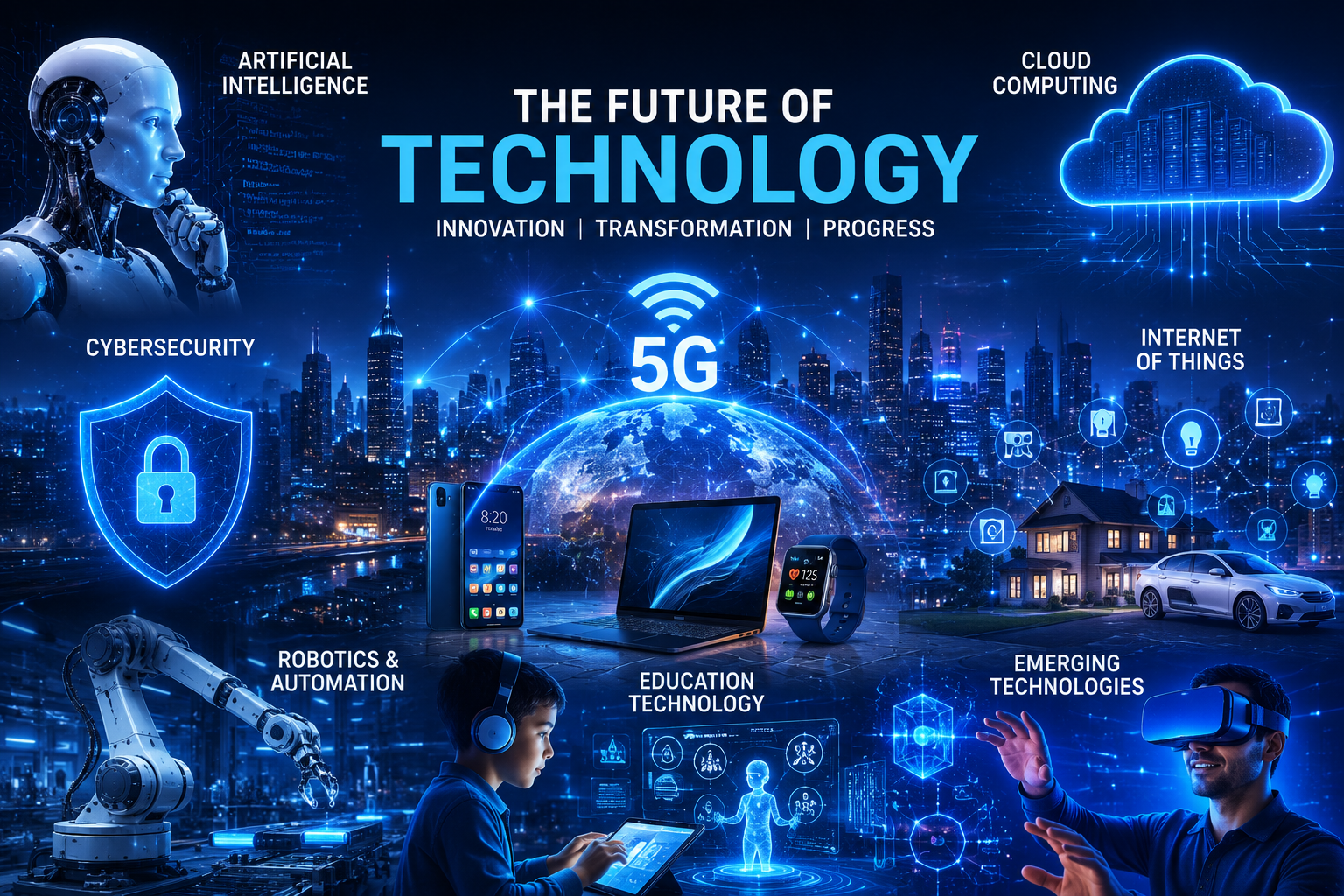
Technology has become an essential part of modern life, influencing the way people communicate, work, learn, and entertain themselves. Over the last decade, technological innovation has accelerated at an incredible pace, introducing smarter devices, faster internet, and intelligent software that continue to reshape industries worldwide. From artificial intelligence to cloud computing, businesses and individuals rely on technology to improve productivity, reduce costs, and create better experiences. As new innovations emerge, technology is no longer just supporting daily life—it is actively transforming how society functions and prepares for the future.
Artificial Intelligence Is Changing Every Industry
Artificial Intelligence (AI) is one of the most significant technological advancements of the modern era. AI-powered systems are helping businesses automate repetitive tasks, analyze massive amounts of data, and improve customer experiences through intelligent recommendations and virtual assistants. Healthcare organizations use AI to assist doctors in diagnosing diseases more accurately, while financial institutions rely on machine learning algorithms to detect fraud and manage investment strategies. Retail companies personalize shopping experiences by understanding customer preferences, and manufacturers improve production efficiency through predictive maintenance. As AI technology continues to evolve, it will become even more integrated into everyday business operations and consumer products.
Cloud Computing Powers Modern Businesses
Cloud computing has completely changed how organizations store, manage, and access data. Instead of relying on expensive physical servers, companies can securely host applications and information on cloud platforms that are accessible from anywhere with an internet connection. This flexibility allows businesses to scale resources based on demand while reducing infrastructure costs. Cloud technology also supports remote work by enabling employees to collaborate in real time using shared documents, communication platforms, and project management tools. Small businesses benefit from enterprise-level technology without making significant upfront investments, making cloud computing one of the foundations of digital transformation.
Cybersecurity Has Become More Important Than Ever
As technology continues to advance, cyber threats have become increasingly sophisticated. Organizations handle sensitive customer information, financial records, and confidential business data that require strong protection against hackers and cybercriminals. Modern cybersecurity involves multiple layers of defense, including encryption, multi-factor authentication, regular software updates, and employee awareness training. Businesses also invest in advanced threat detection systems that monitor suspicious activity around the clock. Individuals play an important role by using strong passwords, avoiding phishing scams, and keeping their devices updated. A strong cybersecurity strategy helps build trust while protecting valuable digital assets from evolving threats.
The Rise of Smart Devices and the Internet of Things
The Internet of Things (IoT) has connected everyday devices to the internet, making homes and workplaces smarter than ever before. Smart thermostats automatically adjust temperatures to improve energy efficiency, while security cameras provide remote monitoring through mobile applications. Wearable devices track health metrics such as heart rate, sleep quality, and physical activity, helping users maintain healthier lifestyles. In industrial environments, IoT sensors monitor equipment performance and identify maintenance needs before costly failures occur. As connectivity continues to improve through faster networks, smart devices will become even more intelligent and seamlessly integrated into daily life.
The Impact of Technology on Education
Technology has revolutionized education by making learning more accessible and interactive. Online learning platforms allow students to access courses from leading institutions regardless of their location. Digital classrooms, educational applications, and video conferencing tools support both traditional and remote learning environments. Artificial intelligence can personalize learning experiences by adapting educational content based on a student’s progress and learning style. Virtual reality and augmented reality are also creating immersive educational experiences that improve understanding of complex subjects. These innovations continue to expand opportunities for learners of all ages around the world.
Emerging Technologies Shaping the Future
Several emerging technologies are expected to redefine industries over the coming years. Blockchain technology is improving transparency and security across financial services and supply chain management. Quantum computing promises to solve highly complex problems that traditional computers cannot efficiently process. Fifth-generation (5G) wireless networks provide faster connectivity, enabling real-time communication for autonomous vehicles, smart cities, and advanced industrial automation. Robotics continues to improve manufacturing, logistics, and healthcare by performing repetitive or dangerous tasks with greater precision. These innovations will create new opportunities while driving the next wave of global digital transformation.
Conclusion
Technology continues to evolve at an extraordinary pace, creating opportunities that improve business operations, healthcare, education, communication, and everyday life. Organizations that embrace innovation are better positioned to remain competitive in an increasingly digital world. While technological advancement brings challenges such as cybersecurity risks and privacy concerns, responsible development and adoption can maximize its benefits for society. As artificial intelligence, cloud computing, smart devices, and other emerging technologies continue to mature, the future promises a more connected, efficient, and intelligent world where technology plays an even greater role in shaping human progress.