







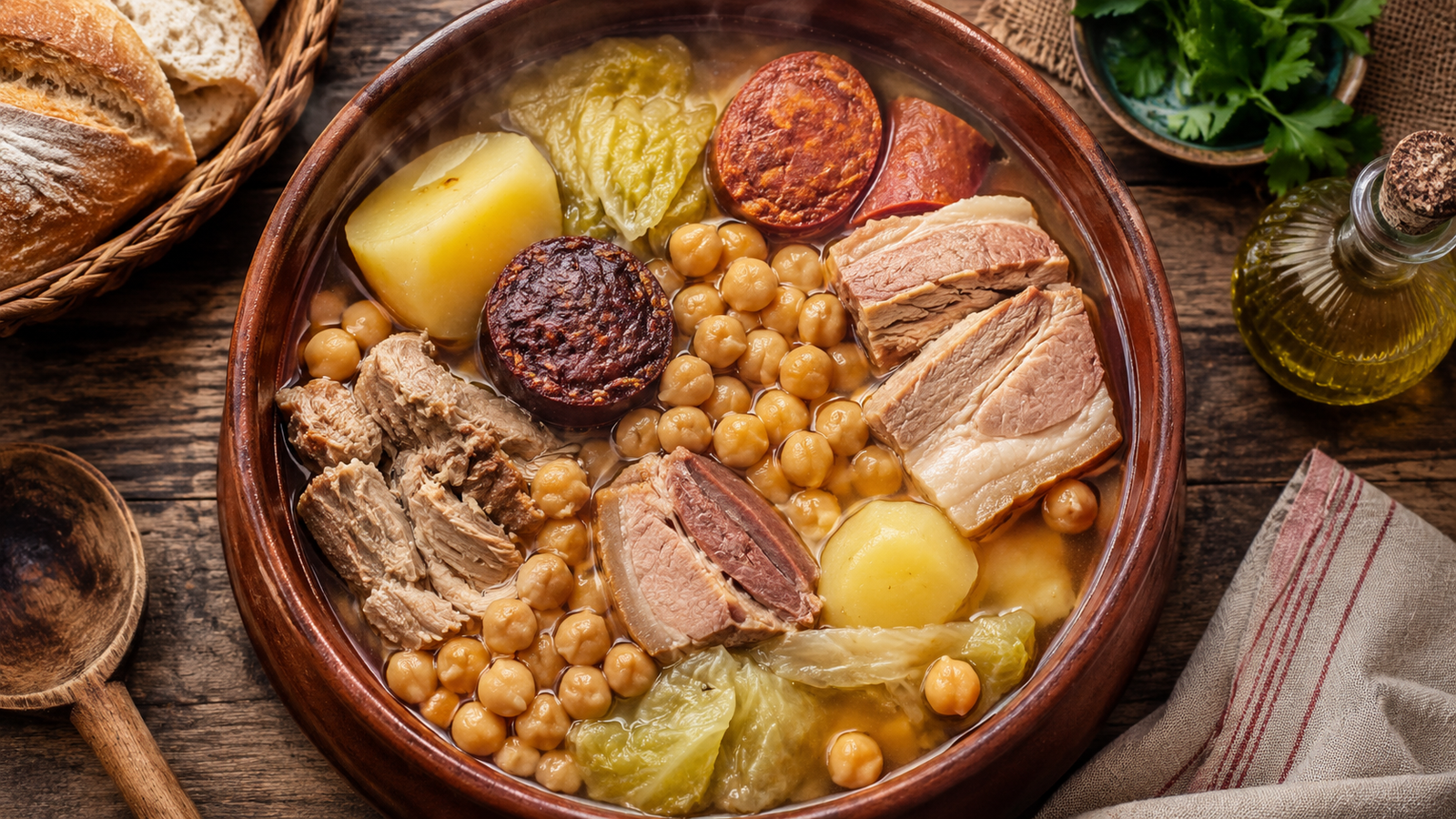
If you have typed “best cocido gallego near me” into Google, you are already one step ahead of most people. This dish is one of Spain’s best-kept secrets, and it is finally getting the attention it deserves outside of Galicia. Cocido gallego is a rich, hearty stew that comes from the Galicia region in the north-west corner of Spain. It is built around chickpeas, several cuts of pork, chorizo, potatoes and leafy greens, all slowly boiled together until the flavours melt into one another.
The word “cocido” simply means “cooked” in Spanish, and that tells you everything about how old and basic this dish really is. People in Galicia have been making versions of it for centuries, long before restaurants existed to serve it to curious travellers. It started as a way for farming families to use every single part of the pig after the yearly slaughter, known locally as the matanza. Nothing went to waste. The ears, the tail, the trotters, the cheek, all of it found its way into the pot alongside chickpeas and whatever vegetables were in season.
Today, cocido gallego has grown into something bigger than a farmhouse meal. It is now a proud symbol of Galician identity, served in family homes on Sundays, at festivals, and in Spanish restaurants across the UK that want to give diners a genuine taste of northern Spain. If you live in London, Manchester, Birmingham or anywhere else in the UK and you are craving this dish, this guide will help you understand exactly what to look for, what makes a version authentic, and how to find a restaurant near you that actually does it justice.
The History Behind This Galician Classic
To really appreciate cocido gallego, it helps to know where it comes from. Galicia sits in a cooler, wetter part of Spain compared to the sun-baked south. The climate there is closer to parts of the UK and Ireland than to Andalusia, which is one reason British diners often find Galician food so comforting and familiar. Long winters called for filling, warming meals, and cocido gallego was the answer.
Historically, this was peasant food. Farming families raised pigs, and once a year they would slaughter one and preserve as much of the meat as possible through salting and curing. This meat, along with chickpeas grown on the land, formed the backbone of the dish. Nothing fancy went into it because fancy ingredients were not available. Instead, the dish relied on technique, patience and the natural flavour that comes from slow cooking meat and vegetables together in the same pot for hours.
Over time, as Galicia’s economy grew and people moved between rural areas and cities, the dish followed them. It became associated with celebration rather than just survival. Families started making it for Sunday lunches, religious holidays and Carnival season. Restaurants in Galician towns began putting their own spin on it, and eventually, chefs who left Galicia brought the recipe with them to Madrid, Barcelona, and even abroad to the UK and beyond.
Interestingly, cocido gallego is often confused with caldo gallego, another Galician classic. Caldo gallego is a lighter broth-based soup made with beans, greens and some pork, usually eaten as an everyday meal. Cocido gallego is the heartier, more festive version, packed with multiple cuts of meat and served as a full meal in its own right. If you are searching specifically for cocido, make sure the restaurant you choose is not simply serving you a bowl of caldo instead, since the two are easy to mix up on a menu.
Read More: Best Chuflay Cocktail Near Me – Find the Perfect Chuflay Cocktail Near You
What Actually Goes Into an Authentic Cocido Gallego
One of the reasons people search so specifically for “best cocido gallego near me” is that this dish is not something you can throw together carelessly. A proper version needs several components, and skipping even one of them changes the whole experience. Here is what you should expect to find on your plate.
Chickpeas form the base of the dish and soak up all the flavour from the meats as everything cooks together. Lacón, which is cured pork shoulder, is one of the signature ingredients and gives the dish its distinct smoky, salty depth. Chorizo, the well-known Spanish sausage, adds spice and colour to the broth. Many versions also include pork ribs, pork belly, and sometimes even a pig’s ear or trotter for diners who want the full traditional experience.
Potatoes are boiled separately in the meat broth so they take on the flavour without falling apart completely. Cabbage or grelos, which are turnip greens unique to Galicia, are added toward the end of cooking to keep some bite and freshness against the richness of the meat. In the UK, some restaurants substitute grelos with a similar leafy green if the real thing is not available, but the closer a kitchen sticks to grelos, the more authentic the dish will taste.
The best restaurants serve everything on separate plates rather than all mixed into one bowl. Traditionally, the broth is served first as a starter, sometimes with a bit of pasta or rice added to it. Then the meats, chickpeas, potatoes and greens come out on a second plate for the main course. This style of serving, called “vuelta y vuelta” in some regions, is part of what makes the meal feel like an occasion rather than just a quick dinner.
How To Know If a Restaurant Near You Does It Right
Since cocido gallego takes hours of slow cooking, it is not something a restaurant can throw together in fifteen minutes. This is actually one of the easiest ways to judge whether a place near you is serious about the dish or just adding it to the menu to look authentic.
First, check if the restaurant requires you to order in advance. Many genuine Spanish restaurants in the UK that serve cocido gallego properly will ask you to book it a day ahead, or they only offer it on specific days of the week, often weekends. This is a strong signal that they are making it fresh in small batches rather than reheating a mass-produced version.
Second, look at how the dish is described on the menu. If it lists lacón, chorizo, chickpeas and grelos by name, that is a good sign the kitchen understands the dish. Vague descriptions like “Spanish meat stew” without naming the components often mean the kitchen has simplified or altered the recipe.
Third, pay attention to portion size and presentation. Authentic cocido gallego is generous. It is meant to be a filling, multi-course meal, not a small side dish. If it arrives as a tiny bowl with a few chickpeas floating in broth, that is not the real deal.
Fourth, read recent reviews carefully rather than just looking at the star rating. Search for the words “cocido” or “Galician” within reviews to see what other diners specifically said about that dish, since general restaurant reviews can be positive for reasons unrelated to this particular item on the menu.
Finally, consider whether the restaurant has any connection to Galicia itself. Spanish restaurants in the UK run by chefs or owners originally from Galicia, or restaurants that specifically brand themselves as Galician rather than generic Spanish or tapas restaurants, tend to take far more care with regional dishes like this one.
Best Ways To Search For Cocido Gallego In Your Area
Finding a good bowl of cocido gallego near you takes a bit more effort than searching for pizza or burgers, simply because it is a niche dish. Here are some practical approaches that tend to work well.
Start with a direct search using terms like “Galician restaurant near me” rather than just “Spanish restaurant near me.” Galician restaurants are far more likely to have cocido gallego as a proper feature dish rather than an occasional special. Spanish restaurants that focus on tapas from Andalusia or the Basque Country may not offer it at all.
Use restaurant discovery apps and filter by cuisine type where possible. Many of these platforms allow you to search dish names directly, so typing “cocido gallego” into the search bar of a restaurant app can sometimes surface exactly the right places, especially in cities with larger Spanish communities such as London.
Check community groups and forums where Spanish expats in the UK share recommendations. Facebook groups for Spanish people living in specific UK cities often have detailed discussions about where to get proper home-style Galician food, and these recommendations tend to be more reliable than generic online reviews because the people posting have grown up eating the real thing.
Look out for Spanish food festivals or pop-up events in your city. Some Galician associations and cultural groups in the UK organise seasonal events where cocido gallego is served as part of a wider celebration, and these can be a great way to try an authentic version even if there is no permanent restaurant serving it nearby.
Finally, do not ignore smaller, family-run restaurants over larger chains. Cocido gallego is a labour-intensive, old-fashioned dish, and it tends to survive best in kitchens run by people who grew up eating it at home rather than large commercial operations focused on volume.
Regional Variations You Might Come Across
Even within Galicia, there is no single “correct” version of cocido gallego, and this variation often carries over into how it is prepared abroad. Some versions place more emphasis on the pork, using several different cured cuts, while others lean more heavily on the chickpeas and vegetables. In coastal areas of Galicia, you might occasionally find versions that include a small amount of seafood, though this is far less common than the classic pork-based recipe.
The type of chorizo used can also vary. Some cooks prefer a milder chorizo, while others use one with more paprika and a spicier kick. The greens used can shift depending on what is in season, with grelos being the traditional choice but cabbage sometimes substituted, particularly outside of Galicia where grelos can be harder to source.
When you are searching for the best version near you, it is worth trying a couple of different restaurants if you have the option, since you may find that one place’s take on the dish suits your taste far more than another’s. Some diners prefer a saltier, meat-forward version, while others enjoy a lighter broth with a stronger vegetable presence.
What To Expect When You Order It
If this is your first time trying cocido gallego, it helps to know what the experience typically looks like so you are not caught off guard. The meal usually starts with a warm, savoury broth, sometimes with thin noodles or rice added. This first course is meant to warm you up and prepare your appetite for the heartier plate that follows.
The main plate arrives with the chickpeas, potatoes and greens arranged together, often with the various meats sliced and placed alongside or on top. Because so many different cuts of pork are typically used, do not be surprised to see a variety of textures on the plate, from tender slices of lacón to small pieces of chorizo and rib meat.
This is a filling meal, and most people find that they cannot manage dessert afterward, or need a good amount of time before ordering anything else. It is common in Spain, and increasingly in UK restaurants that serve this dish properly, for cocido gallego to be treated as a full lunch or dinner rather than one course among many. Some restaurants pair it with a simple side of bread to help soak up the broth, and a glass of Galician white wine, such as Albariño, is a popular match despite the dish itself being quite rich and meaty.
Tips For Enjoying Cocido Gallego To The Fullest
A few small things can make a big difference in how much you enjoy this dish. Arrive hungry, since portions are usually generous and the meal is designed to be filling rather than light. Pace yourself with the broth course so you have room left for the meats and chickpeas that follow.
If you are new to some of the more traditional cuts of pork, such as ear or trotter, feel free to ask your server which pieces are included before ordering. Many restaurants in the UK will happily adjust the mix of meats slightly for diners who prefer more familiar cuts like rib or shoulder, while still keeping the dish authentic in spirit.
Pay attention to the broth itself, since it often carries the most concentrated flavour in the entire dish. Some diners like to sip it on its own before adding any bread or rice, so they can appreciate the depth that comes from hours of slow cooking.
Finally, do not rush. This is not fast food, and it was never meant to be eaten quickly. Taking your time with each component, from the broth to the meats to the greens, is part of what makes the meal feel special rather than just another dinner out.
Why This Dish Deserves More Attention In The UK
Spanish food culture in the UK has grown enormously over the past decade, but much of that growth has focused on tapas, paella and simple grilled dishes that are easy to recreate anywhere. Regional specialities like cocido gallego have stayed relatively under the radar, mostly known to people with a direct connection to Galicia or those who have travelled there specifically.
This is starting to change as more diners look for deeper, more authentic regional experiences rather than generic “Spanish” menus. Cocido gallego offers exactly that. It tells a real story about a specific place, its history, its climate and the resourcefulness of the people who created it. For UK diners who have already explored the more famous corners of Spanish cuisine, this dish is a natural next step.
Restaurants that take the time to prepare it properly are effectively preserving a piece of culinary history every time they serve a bowl. Supporting these places, whether they are long-standing Spanish restaurants or newer additions to your local food scene, helps keep dishes like this alive outside of their home region.
Final Thoughts On Finding The Best Cocido Gallego Near You
Searching for the best cocido gallego near me is really about patience and a bit of detective work, since this is not a dish you will find on every corner. Focus your search on Galician or Spanish restaurants with genuine regional roots, look for menus that name the specific ingredients rather than describing the dish vaguely, and do not be afraid to ask questions before you order.
Once you find a place that gets it right, you will understand immediately why this dish has been a centrepiece of Galician cooking for generations. It is warming, generous, deeply flavourful, and built on a tradition of using every part of the ingredients available. Whether you are trying it for the first time or you already know and love it, taking the time to track down an authentic version near you is well worth the effort.