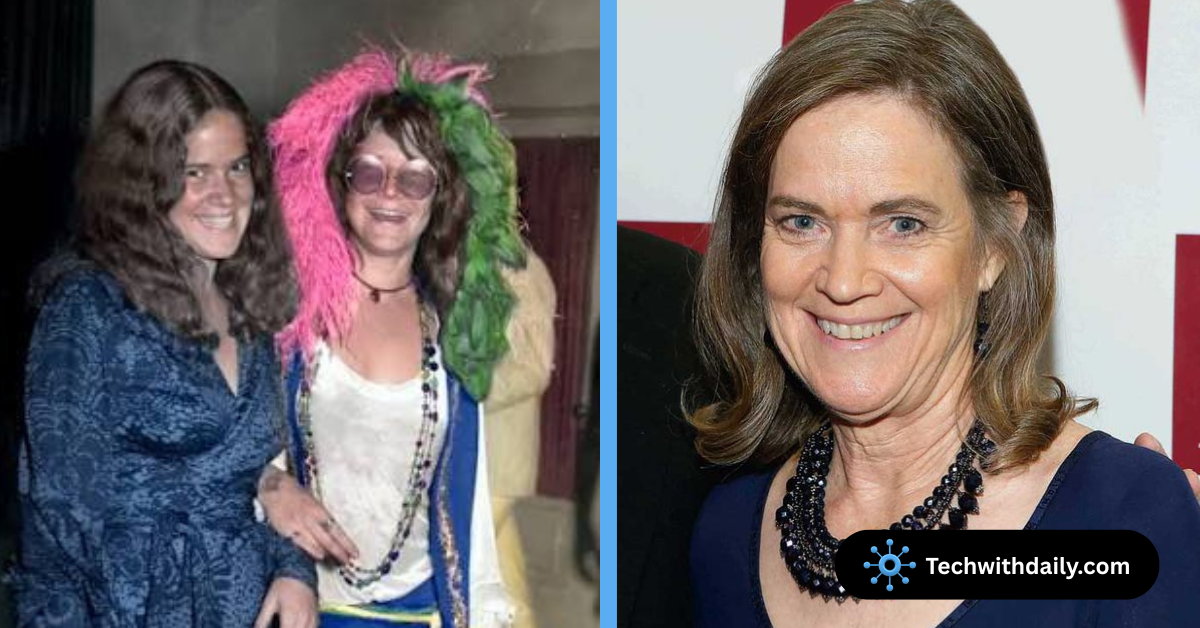








Few individuals have shaped the American conversation about capital punishment as profoundly as Sister Helen Prejean. A Catholic nun from Louisiana, she became one of the world’s most recognized anti-death penalty advocates after writing about her experiences ministering to men on death row. Her story reached millions through an Oscar-winning film, and decades later, she remains an active voice in the fight against executions. Here’s her full story.
| Quick Facts | Details |
|---|---|
| Full Name | Helen Prejean |
| Date of Birth | April 21, 1939 |
| Birthplace | Baton Rouge, Louisiana |
| Religious Order | Congregation of St. Joseph (formerly Sisters of St. Joseph of Medaille) |
| Education | St. Mary’s Dominican College; Saint Paul University, Ottawa |
| Known For | “Dead Man Walking” (1993); death penalty abolition activism |
| Notable Honors | Guggenheim Fellowship; Pacem in Terris Award; Laetare Medal |
| Key Roles | Founder, Survive; National Chairperson, National Coalition to Abolish the Death Penalty (1993-1995) |
Who Is Sister Helen Prejean?
Sister Helen Prejean is an American Catholic nun and one of the world’s most influential advocates for abolishing the death penalty. Her advocacy began in the early 1980s when she agreed to become a pen pal to a death row inmate in Louisiana, an experience that ultimately reshaped the direction of her entire religious vocation and led her to become a leading voice against capital punishment.
Her 1993 memoir, “Dead Man Walking: An Eyewitness Account of the Death Penalty in the United States,” became a national bestseller and was nominated for a Pulitzer Prize. The book was later adapted into a 1995 film of the same name, in which actress Susan Sarandon won the Academy Award for Best Actress portraying Prejean, bringing her story and her cause to a massive global audience.
Since then, Prejean has continued her advocacy work for more than four decades, ministering to death row inmates, counseling murder victims’ families, lecturing around the world, and pushing the Catholic Church itself to strengthen its formal opposition to capital punishment. She remains active in this work well into her eighties.
Early Life and Religious Calling
Helen Prejean was born on April 21, 1939, in Baton Rouge, Louisiana, the second of three children born to Louis Prejean, a lawyer, and Gusta Mae Prejean, a nurse. Growing up in a household with parents in both law and healthcare gave her early exposure to professions centered on service and justice, themes that would later define her life’s work.
At the age of eighteen, Prejean committed to religious life, joining the Sisters of St. Joseph, now part of the Congregation of St. Joseph, in 1957. This was a period when convent life operated under strict, semi-cloistered rules established under canon law, with a heavy emphasis on obedience, structured prayer, and limited engagement with the outside world.
She earned a Bachelor of Arts degree in English and education from St. Mary’s Dominican College in New Orleans in 1962, and later completed a Master’s degree in religious education from Saint Paul University in Ottawa, Canada, in 1973. Her early religious career centered on teaching, working as a religious education instructor and eventually becoming the Formation Director for her religious community.
A Turning Point: Vatican II and a New Path
Prejean has spoken openly about how the reforms of the Second Vatican Council, which began in the early 1960s, fundamentally reshaped her understanding of religious life. Under the older system, she has described giving up not just personal will but also critical thinking, since obedience to superiors was treated as the primary path to holiness.
Vatican II’s reforms opened up new possibilities for nuns like Prejean, allowing for more open discussion, personal engagement with social issues, and greater freedom to choose one’s own ministry rather than simply following predetermined religious duties. This shift laid the groundwork for the kind of direct, hands-on social justice work that would eventually define her career.
In 1981, seeking to live and work more directly among the poor, Prejean moved into the St. Thomas Housing Project in New Orleans. It was there that she was introduced to what would become her defining life’s work, an invitation to correspond with a man on death row, an invitation that would change the entire direction of her ministry.
Becoming a Spiritual Adviser to Death Row Inmates
In 1982, Prejean began corresponding with Elmo Patrick Sonnier, a man who had been sentenced to death for the murder of two teenagers in Louisiana. What began as letter writing evolved into a deeper pastoral relationship, with Prejean eventually becoming his spiritual adviser as his execution date approached.
In 1984, Prejean witnessed Sonnier’s execution by electric chair, an experience that profoundly affected her and crystallized her opposition to capital punishment. She later described feeling that the secrecy surrounding executions allowed the practice to continue largely unchallenged by the public, since most people never had to confront the reality of what an execution actually involved.
She went on to serve as spiritual adviser to a second death row inmate, Robert Lee Willie, who had been convicted of a 1980 kidnapping and murder. Prejean accompanied Willie to his execution as well, deepening her firsthand understanding of capital punishment’s impact not just on the condemned, but on everyone connected to the process, including victims’ families, prison staff, and legal professionals.
“Dead Man Walking”: The Book That Changed the Conversation
Believing that the secrecy surrounding executions needed to be exposed to the public, Prejean wrote “Dead Man Walking: An Eyewitness Account of the Death Penalty in the United States,” published in 1993. The book detailed her experiences with Sonnier and Willie, along with the broader legal, social, and spiritual problems she had come to see in the American capital punishment system.
The book was released at a time when public support for the death penalty in the United States exceeded 80 percent nationally, and was closer to 90 percent in Prejean’s home state of Louisiana. Despite, or perhaps because of, this challenging political climate, the book became a number-one New York Times bestseller and was nominated for a Pulitzer Prize, sparking a genuine national conversation about capital punishment that had rarely occurred with this level of public engagement.
“Dead Man Walking” was distinctive for exploring the death penalty’s effects on everyone involved, not just condemned inmates, but also the families of murder victims, prison officials, and legal professionals caught within the system. This comprehensive, humanizing approach helped the book resonate with readers who might not otherwise have engaged deeply with death penalty debates.
The Film, Play, and Opera Adaptations
The book’s cultural impact expanded dramatically when actress Susan Sarandon and her partner, director and actor Tim Robbins, adapted it into a feature film. Released in 1995 and directed by Robbins, “Dead Man Walking” starred Sarandon as Prejean and Sean Penn as a death row inmate character combining elements of both Sonnier and Willie’s stories. Sarandon won the Academy Award for Best Actress for her performance, bringing global attention to Prejean’s work and message.
The story’s reach extended even further when composer Jake Heggie and librettist Terrence McNally adapted it into an opera, which premiered with the San Francisco Opera in 2000. A stage play version followed in 2003, meaning Prejean’s original memoir eventually reached audiences through nearly every major artistic medium, film, opera, and theater, in addition to the original book itself.
This multi-format cultural presence gave Prejean’s message an unusually broad reach compared to most activists working on complex policy issues, allowing her story to resonate with audiences who might never have picked up a nonfiction book about capital punishment but encountered her message through film or performance instead.
Building a National Movement
Beyond her writing, Prejean became deeply involved in formal advocacy organizations working to abolish the death penalty. She served on the board of the National Coalition to Abolish the Death Penalty from 1985 to 1995, and as the organization’s Chairperson from 1993 to 1995, coinciding with the release and growing influence of her book.
In 1999, she formed Moratorium 2000, a petition drive calling for a nationwide halt to executions, which eventually grew into a broader national education campaign known as The Moratorium Campaign. This campaign later gave rise to Witness to Innocence, an organization composed of death row survivors who were ultimately exonerated after being wrongfully convicted, giving formerly condemned individuals a platform to share their experiences directly.
She also founded Survive, a victim’s advocacy organization based in New Orleans dedicated to supporting families of murder victims, reflecting her consistent emphasis throughout her career on the full human impact of violent crime and its aftermath, not solely the fate of the condemned. In 2007, she joined a delegation presenting a petition signed by five million people worldwide to the United Nations, calling for a global moratorium on capital punishment.
Influence on the Catholic Church’s Position
One of Prejean’s most significant, though less publicly visible, achievements has been her influence on the Catholic Church’s official teaching regarding the death penalty. She made personal appeals to two popes, John Paul II and Pope Francis, urging the Church to adopt an unequivocal opposition to capital punishment under any circumstances.
Following Prejean’s advocacy, the Catholic catechism under Pope John Paul II was revised to significantly strengthen the Church’s opposition to executions, though it still permitted rare exceptions at the time. Then, following a meeting with Prejean in August 2018, Pope Francis announced further revisions to the catechism, declaring the death penalty inadmissible in all circumstances because it constitutes an attack on the fundamental dignity of the human person.
This shift represented a major theological and institutional victory for Prejean’s decades of advocacy, demonstrating her ability to influence not just public opinion and government policy, but also the formal doctrine of one of the world’s largest religious institutions.
Later Books and Continued Advocacy
Prejean published a second book, “The Death of Innocents: An Eyewitness Account of Wrongful Executions,” in 2004, examining two additional cases involving men she believed were innocent of the crimes for which they were executed. The book also explored broader patterns in Supreme Court death penalty rulings and scrutinized the death penalty record of George W. Bush during his time as Governor of Texas.
In 2019, she released a third book, “River of Fire: My Spiritual Journey,” which focused less on her death penalty advocacy directly and more on the personal and spiritual path that led her to that work, including her early years in the convent and her spiritual awakening following the reforms of Vatican II.
Prejean has continued lecturing extensively throughout her career, growing from audiences as small as ten or twelve people early in her advocacy to giving up to 140 lectures a year at the height of her public engagement following her second book’s release. She remains based at the Ministry Against the Death Penalty in New Orleans, and as of recent years, continued to maintain an active speaking schedule well into her eighties.
Awards and Recognition
Over the course of her advocacy career, Prejean has received more than one hundred honors and awards, beginning with the Abolitionist Award from the Louisiana Capital Defense Project in 1986. Her recognitions include a Guggenheim Fellowship, the Otis Social Justice Award, and the Chief Justice Earl Warren Civil Liberties Award from the American Civil Liberties Union.
In 1996, she received the Laetare Medal from the University of Notre Dame, one of the oldest and most prestigious honors given to American Catholics, recognizing outstanding service to the Church and society. She has also received numerous honorary degrees from universities recognizing her decades of advocacy and humanitarian work.
In 1998, she was awarded the Pacem in Terris Award, named after a 1963 papal encyclical calling for global peace, further cementing her recognition within both religious and secular human rights circles as one of the most significant moral voices on capital punishment of her generation.
Frequently Asked Questions
What is Sister Helen Prejean known for? She is known for her advocacy against the death penalty and her bestselling memoir “Dead Man Walking,” which was adapted into an Academy Award-winning film.
How did Sister Helen Prejean become involved in death penalty advocacy? She began corresponding with a death row inmate in 1981 and later served as his spiritual adviser, witnessing his execution in 1984, which shaped her lifelong opposition to capital punishment.
How many books has Sister Helen Prejean written? She has written three major books: “Dead Man Walking” (1993), “The Death of Innocents” (2004), and “River of Fire” (2019).
Has Sister Helen Prejean influenced the Catholic Church’s position on the death penalty? Yes, her advocacy contributed to Pope Francis declaring the death penalty inadmissible under any circumstances in 2018.
Is Sister Helen Prejean still active today? Yes, she continues to lecture, write, and advocate against the death penalty well into her eighties.
Conclusion
Sister Helen Prejean transformed a single act of compassion, agreeing to correspond with a death row inmate, into a decades-long movement that reshaped American public conversation about capital punishment and even influenced the Catholic Church’s own official teaching. Through her writing, advocacy, and personal ministry to both the condemned and victims’ families, she has consistently pushed for a more honest, humane reckoning with what the death penalty actually involves. Her work stands as a rare example of one person’s sustained moral conviction genuinely shifting both public opinion and institutional policy over the course of a lifetime.