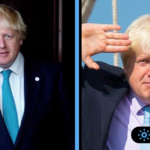



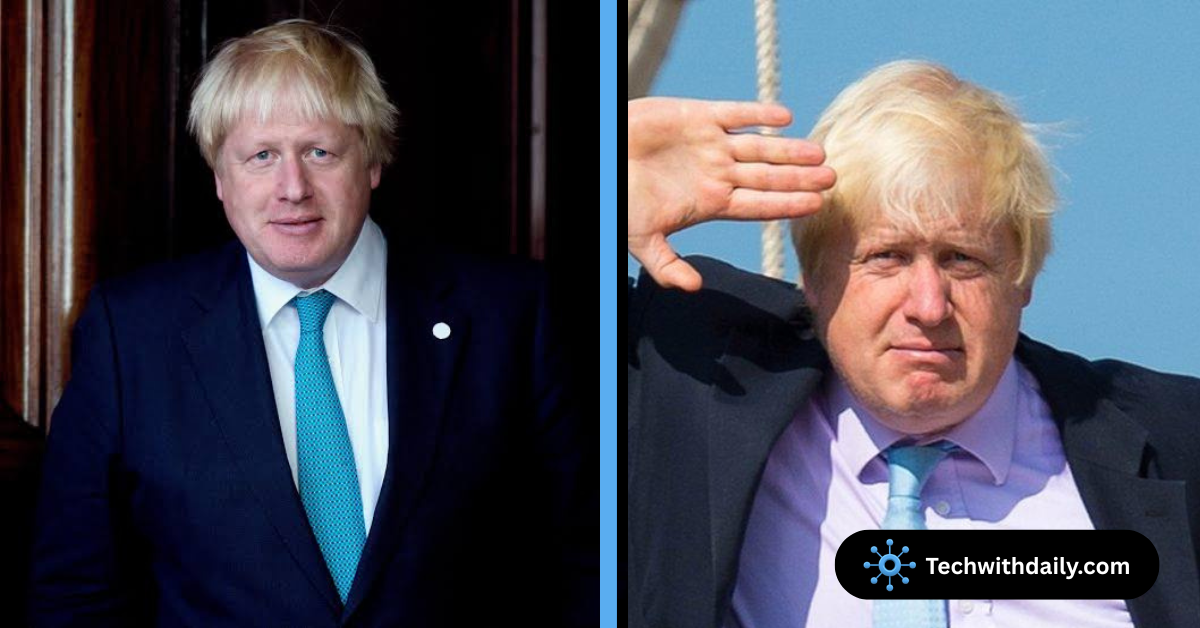
Few politicians in modern British history have divided opinion quite like Boris Johnson. To some, he’s the man who “got Brexit done” and led the UK through a pandemic. To others, he’s remembered for scandal and broken promises. Whatever side people land on, there’s no denying his career has been one of the most eventful in recent UK politics. Here’s the full story, from his childhood in New York to his life after Downing Street.
| Quick Facts | Details |
|---|---|
| Full Name | Alexander Boris de Pfeffel Johnson |
| Date of Birth | June 19, 1964 |
| Birthplace | New York City, United States |
| Education | Eton College; Balliol College, Oxford |
| Political Party | Conservative Party |
| Notable Roles | Mayor of London (2008-2016), Foreign Secretary (2016-2018), Prime Minister (2019-2022) |
| Spouse | Carrie Johnson (married 2021); previously married to Allegra Mostyn-Owen and Marina Wheeler |
| Children | Six confirmed, including Wilfred, Romy, Frank, and Poppy with Carrie |
| Known For | Brexit campaign, COVID-19 leadership, Partygate scandal |
| Current Work | Writer, columnist, public speaker |
Who Is Boris Johnson?
Boris Johnson served as Prime Minister of the United Kingdom from July 2019 to September 2022, one of the most turbulent periods in recent British political history. Before that, he spent eight years as Mayor of London and built a long career as a journalist and newspaper columnist, giving him a public profile that stretched back decades before he ever entered Downing Street.
Johnson became one of the most recognizable politicians in the world for his role in the Brexit campaign, his distinctive public speaking style, and his often unpredictable approach to leadership. Supporters point to his role in delivering Brexit and steering the UK’s COVID-19 vaccine rollout. Critics point to the Partygate scandal, his handling of the pandemic, and a long list of controversies that eventually forced him out of office.
Since leaving Downing Street, Johnson has stayed in the public eye through journalism, a bestselling memoir, paid speaking engagements, and regular commentary on major world events, including the war in Ukraine. Whether people admire him or criticize him, Johnson remains one of the most talked-about figures in British politics.
Early Life and Education
Boris Johnson was born Alexander Boris de Pfeffel Johnson on June 19, 1964, in New York City, where his father, Stanley Johnson, was studying at the time. The family later moved back to the UK, and Johnson spent parts of his childhood moving between countries as his father’s academic and diplomatic career took the family to different places, including a period in Brussels.
He was educated at Eton College, one of Britain’s most prestigious private schools, where he was already known for his wit and larger-than-life personality. From Eton, he went on to study Classics at Balliol College, Oxford, where he became president of the Oxford Union, a well-known training ground for aspiring British politicians, and a member of the notorious Bullingdon Club, an exclusive and controversial dining society.
His time at Oxford placed him alongside a number of future political figures, and his flair for public speaking and performance was already evident. Even in his university years, Johnson had a reputation for combining sharp intelligence with a deliberately shambolic public image, a combination that would go on to define much of his later political career.
Journalism Career
Before entering politics, Johnson built a long career in journalism. He started out at The Times but was dismissed early on after fabricating a quote in a story, an incident that would resurface repeatedly throughout his career whenever questions about his honesty came up.
He then moved to The Daily Telegraph, where he served as the paper’s Brussels correspondent in the early 1990s. His reporting from Brussels often exaggerated or distorted European Union regulations for comic effect, stories that proved hugely popular with readers and helped shape a skeptical view of the EU among parts of the British public, years before Brexit became a serious political possibility.
Johnson later became editor of The Spectator, a influential British political magazine, while simultaneously serving as a Member of Parliament, an unusual dual role that drew criticism but also kept him firmly in the public eye. Under his editorship, the magazine became known for a mix of serious political commentary and the kind of provocative, attention-grabbing content that Johnson himself had built his reputation on as a writer.
Discover more: Annabel Denham Biography: Career, Achievements, and Rise as a Political Voice
His journalism career gave him a public profile, a reputation for colorful language, and a direct line to public opinion that would prove invaluable once he moved into frontline politics. Few British politicians have entered office with as long or as well-known a media career already behind them, and that background shaped how he communicated with voters for the rest of his political life.
Entry into Politics
Johnson was elected as the Member of Parliament for Henley in 2001, marking his formal entry into national politics. He held the seat until 2008, when he made the decision to run for Mayor of London, a role that would dramatically raise his public profile beyond Westminster and beyond the readership of the newspapers and magazines he had written for.
He won the London mayoral election in 2008, defeating incumbent Ken Livingstone, and was re-elected for a second term in 2012. As mayor, Johnson became closely associated with the London 2012 Olympic Games, which took place during his tenure and were widely regarded as a success for the city, boosting both London’s international reputation and Johnson’s own political standing.
He also introduced London’s public bicycle-sharing scheme, which quickly became known informally as “Boris Bikes,” a nickname that stuck for years afterward and became one of the more lighthearted parts of his public legacy. Alongside this, his time as mayor included major infrastructure projects and efforts to position London as a global business and cultural hub.
During his two terms as mayor, Johnson built a reputation as a pragmatic, media-friendly figure who could appeal to voters beyond the traditional Conservative base, including many who wouldn’t normally support his party. This broad appeal, often attributed to his humor and willingness to poke fun at himself, became one of his greatest political assets in the years that followed.
The Brexit Campaign
In 2016, Johnson became one of the most prominent faces of the Vote Leave campaign, arguing that the United Kingdom should leave the European Union. His involvement was seen as a major turning point in the referendum campaign, lending mainstream credibility and star power to the Leave side.
Johnson’s decision to back Brexit surprised many observers, given his mixed record on the issue over the years, and some questioned whether the move was driven by conviction or political ambition. Regardless of motive, his high-profile campaigning, including memorable public appearances and slogans like the widely criticized claim about EU funding, played a significant role in the Leave campaign’s narrow victory in June 2016.
The referendum result triggered the resignation of then-Prime Minister David Cameron and set off years of political turmoil in the UK as the country worked out how to actually implement Brexit, turmoil that would eventually pave the way for Johnson’s own rise to the top of British politics.
Foreign Secretary
Following the Brexit referendum, Johnson was appointed Foreign Secretary under new Prime Minister Theresa May in July 2016, a senior cabinet role responsible for the UK’s international relations and diplomacy. His tenure in the role was frequently marked by controversy, including diplomatic gaffes and comments that drew criticism both domestically and internationally.
One notable controversy involved his comments regarding Nazanin Zaghari-Ratcliffe, a British-Iranian woman detained in Iran, which critics argued may have complicated her case and its handling by Iranian authorities. The incident became one of several examples cited by critics who questioned his suitability for high diplomatic office.
Johnson resigned as Foreign Secretary in July 2018, citing disagreements with Theresa May’s approach to Brexit negotiations, specifically her Chequers plan. His resignation positioned him as a leading voice among Conservative Brexit hardliners and set the stage for his eventual leadership bid.
Becoming Prime Minister
After Theresa May resigned in 2019 following repeated failures to get her Brexit deal through Parliament, Johnson entered the Conservative Party leadership contest and won decisively, becoming party leader and Prime Minister in July 2019. He promised to deliver Brexit by the end of October that year, “do or die.”
His early months in office were marked by intense political conflict with Parliament, including a controversial decision to suspend, or prorogue, Parliament for several weeks, which the UK Supreme Court later ruled unlawful. Facing a deadlocked Parliament, Johnson called a general election for December 2019.
The gamble paid off. Johnson led the Conservative Party to a landslide victory, winning the largest Conservative majority since Margaret Thatcher’s era. The result gave him the parliamentary numbers needed to finally pass his Brexit deal, and the UK formally left the European Union in January 2020.
Prime Minister: Key Events
Johnson’s premiership was dominated almost immediately by the COVID-19 pandemic. His government imposed multiple national lockdowns, oversaw a rapid and widely praised vaccine rollout that made the UK one of the first countries to vaccinate large portions of its population, and faced intense scrutiny over decisions made during the crisis, including delays in early lockdown measures and confusion over changing public guidance.
Johnson himself contracted COVID-19 in early 2020 and was hospitalized, spending time in intensive care, an experience he later described as a serious brush with mortality. His recovery and return to Downing Street were widely covered by international media, and he later credited NHS staff directly for saving his life, even naming individual nurses who cared for him during his hospital stay.
The defining scandal of his premiership became known as “Partygate,” involving revelations that gatherings took place at Downing Street during periods when strict lockdown rules banned social gatherings across the country. Images and reports of gatherings involving alcohol, cake, and dozens of staff members struck a nerve with a public that had followed strict rules during the same periods, often missing funerals and hospital visits with loved ones as a result.
The controversy led to police investigations, fines issued to Johnson and other officials, making him the first sitting UK Prime Minister found to have broken the law while in office, and an official parliamentary inquiry that would ultimately conclude he had knowingly misled Parliament about the gatherings.
Resignation and Aftermath
Facing mounting pressure over Partygate and a wave of ministerial resignations in July 2022, Johnson announced he would step down as Conservative Party leader, though he remained caretaker Prime Minister until his successor was chosen. Liz Truss won the subsequent leadership contest but resigned after just 45 days in office, one of the shortest tenures of any British Prime Minister.
In 2023, a House of Commons Privileges Committee investigation concluded that Johnson had deliberately misled Parliament over Partygate. Rather than face the findings and a potential suspension, Johnson resigned as a Member of Parliament altogether, ending his time in frontline British politics after more than two decades.
The years following his resignation brought continued scrutiny, including further reporting on lockdown-era gatherings and questions about his personal finances and business dealings. Despite the controversies, Johnson has remained an active voice in public life rather than retreating from the spotlight.
Life After Downing Street
Since leaving office, Johnson has returned to writing and public commentary, the career that first made him a household name decades earlier. He published a memoir titled “Unleashed” detailing his time in government, including candid revelations about events during his premiership, such as his claim that he had known for over a year that Queen Elizabeth II had bone cancer before her death.
Johnson has also taken on paid speaking engagements around the world and returned to journalism, contributing columns to major outlets. He has remained a vocal commentator on international affairs, particularly regarding the war in Ukraine. In early 2026, he publicly called on Western allies to consider deploying noncombat troops to Ukraine as a show of support against Russian aggression, continuing a pattern of strong public support for Ukraine that began during his time as Prime Minister.
He has also faced some lighter public moments since leaving office, including being turned away from a polling station in 2024 for failing to bring photo identification, a requirement introduced under his own government’s voter ID law, a moment that drew widespread media attention for its irony.
Family Life
Boris Johnson’s personal life has attracted almost as much attention as his political career. He was first married to Allegra Mostyn-Owen from 1987 to 1993. He then married barrister Marina Wheeler, with whom he had four children, before the couple divorced in 2020 following years of public speculation about the state of their marriage.
In 2021, Johnson married Carrie Symonds, a former Conservative Party communications director, in a ceremony at Westminster Cathedral. The couple share four children together: Wilfred, Romy, Frank, and Poppy, born between 2020 and 2023. Family photos and updates, often showing the children with their father’s distinctive blond hair, have become a regular feature in British tabloid coverage of the family.
Johnson has also acknowledged having additional children from relationships outside his marriages, details that have been the subject of extensive media reporting over the years. In total, Johnson is known to have at least six children, though he has generally kept firm boundaries around discussing his children’s lives in detail publicly.
Legacy and Controversies
Boris Johnson’s legacy remains fiercely contested. Supporters credit him with delivering Brexit against significant political obstacles, leading one of the world’s fastest COVID-19 vaccine rollouts, and providing strong, early international support for Ukraine following Russia’s invasion. His ability to win a landslide election victory in 2019 also stands as a significant political achievement.
Critics point to a consistent pattern of controversy throughout his career, from his dismissal from The Times over a fabricated quote to the Partygate scandal that ultimately contributed to his downfall as Prime Minister. The Privileges Committee’s finding that he knowingly misled Parliament remains one of the most serious formal conclusions ever reached about a sitting UK Prime Minister’s conduct in office.
Regardless of where opinion falls, Johnson’s impact on British politics over the past two decades is difficult to overstate. From his years as a journalist to his time as Mayor of London and eventually Prime Minister, his career reshaped major parts of the UK’s political and constitutional landscape, and his continued public presence suggests he has no plans to fade quietly from view.
Frequently Asked Questions
Where was Boris Johnson born? He was born in New York City on June 19, 1964, while his father was studying there.
When was Boris Johnson Prime Minister? He served as UK Prime Minister from July 2019 to September 2022.
Why did Boris Johnson resign? He resigned as party leader in July 2022 following the Partygate scandal and a wave of ministerial resignations, and later resigned as an MP in 2023 after a parliamentary committee found he had misled Parliament.
Who is Boris Johnson’s wife? He is married to Carrie Johnson, whom he wed in 2021. He was previously married to Allegra Mostyn-Owen and Marina Wheeler.
What does Boris Johnson do now? He works as a writer, newspaper columnist, and public speaker, and remains a vocal commentator on international affairs including the war in Ukraine.
Conclusion
Boris Johnson’s journey from a New York-born schoolboy to one of the most consequential and controversial Prime Ministers in modern British history is unlikely to be repeated. His career combined genuine political achievement with persistent scandal, and both sides of that story continue to shape how he’s remembered. Whether history judges him primarily for Brexit, the pandemic, or Partygate, one thing is clear: Boris Johnson’s impact on British politics will be debated for years to come.