
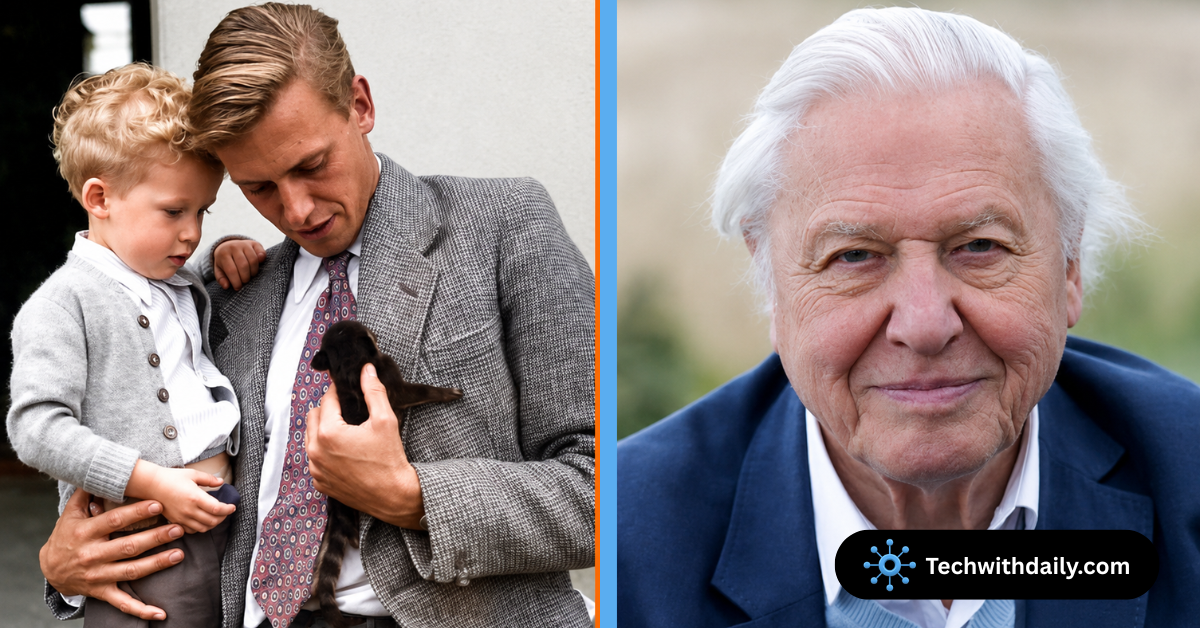
Robert Attenborough has spent decades building a respected academic career in bioanthropology, largely out of the public eye that has followed his father throughout his life. Where Sir David Attenborough became one of the most recognizable voices in the world through nature broadcasting, Robert chose scientific research, studying human populations in places like Papua New Guinea and, more recently, contributing to one of the most talked-about scientific studies of a historical figure in recent memory: the genomic analysis of Ludwig van Beethoven. His career illustrates that fame and impact don’t always travel together, and that meaningful scientific contributions can happen entirely outside the public spotlight.
| Quick Facts | Details |
|---|---|
| Full Name | Robert David Attenborough |
| Parents | Sir David Attenborough and Jane Ebsworth Oriel |
| Sibling | Susan Attenborough |
| Field | Bioanthropology (biological anthropology) |
| Specialization | Human population biology, health, nutrition, and demography, especially in Papua New Guinea |
| Academic Roles | Senior Lecturer / Honorary Senior Lecturer, Australian National University; Senior Fellow, McDonald Institute for Archaeological Research, University of Cambridge |
| Retired From Full-Time Teaching | 2013 |
| Notable Research | Co-author, 2023 genomic study of Ludwig van Beethoven’s hair (Current Biology) |
| Publication Record | Around 22 published works; h-index of 6 |
| Notable Uncle | Richard Attenborough (actor and director) |
Who Is Robert Attenborough?
Robert David Attenborough is the son of Sir David Attenborough, the world-renowned naturalist and broadcaster, and Jane Ebsworth Oriel, David’s wife until her death in 1997. Rather than following his father into broadcasting, Robert built a career in bioanthropology, a scientific field that studies human populations through the combined lenses of biology, genetics, and anthropology.
For much of his career, Robert worked as a senior lecturer in bioanthropology at the Australian National University (ANU) in Canberra, where he taught and mentored students while conducting research focused primarily on human population biology and health in Papua New Guinea. He has also held academic ties to the University of Cambridge, including a position as Senior Fellow at the McDonald Institute for Archaeological Research.
While his father’s fame grew to a level where he’s widely described as a national treasure in the UK, Robert has maintained a deliberately low public profile throughout his career, known within academic circles for his research and teaching rather than any connection to broadcasting or public celebrity. His most notable brush with mainstream public attention came unexpectedly in 2023, when a genetic study he helped lead made international headlines, not because of anything related to Papua New Guinea, but because of Beethoven.
Family Background
Robert was born to Sir David Attenborough and Jane Ebsworth Oriel, alongside his younger sister, Susan Attenborough. David has spoken candidly in interviews about how his demanding filming schedule affected his relationship with his children during their early years, telling Radio Times in 2017 that one of his regrets was being away from his children for months at a time while they were growing up, a natural consequence of a broadcasting career built on extended overseas filming expeditions.
Despite these long absences, family accounts suggest a warm relationship between father and son. David has recounted a memorable story about gifting Robert a pet salamander for his birthday, describing his son’s amazement when the creature, shortly after being placed in its new home, produced offspring, a small but telling glimpse into a household where curiosity about the natural world was clearly nurtured from an early age.
Robert’s uncle, Richard Attenborough, achieved his own considerable fame as an actor and film director, meaning Robert grew up in a family where two of the most prominent men in his life, his father and his uncle, achieved major public recognition in entirely different creative fields. Robert’s own path, by contrast, would lead him toward rigorous scientific research rather than any form of public performance or broadcasting.
His sister Susan took a different route as well, working for years as a primary school headmistress before later stepping into a more active role supporting their father directly as he moved into his late nineties, a role she has described as helping look after him day to day, including tasks like grocery shopping, in the years after their mother’s death.
Education and Cambridge Roots
Robert’s academic path led him to the University of Cambridge, where, by his own account written decades later, he was a student roughly fifty years before he wrote about his most famous research project in 2023, placing the start of his time at Cambridge in the mid-1970s. This detail, shared by Robert himself in a piece for The Conversation, offers a rare, direct glimpse into his own academic timeline from a source more reliable than the speculative age estimates that circulate on unofficial biography sites.
Long after his time as a student, Robert also returned to Cambridge in a professional capacity, becoming a staff member and departmental colleague of researchers including Toomas Kivisild, a respected population geneticist at KU Leuven who would later become one of his key collaborators. This connection between Robert’s early education and his later academic career at the same institution reflects a long, sustained relationship with Cambridge that spanned much of his professional life, running in parallel with his primary career based at the Australian National University.
Career at the Australian National University
For the bulk of his career, Robert worked as a senior lecturer in bioanthropology within the School of Archaeology and Anthropology at the Australian National University in Canberra. During his years there, he taught both undergraduate and postgraduate students, helping shape academic programs that incorporated physiology, behavioural ecology, and human biological variation into the university’s anthropology curriculum.
Colleagues and former students have described him as a dedicated, committed teacher and researcher who helped train a generation of biological anthropology students in Australia. Beyond direct teaching, Robert contributed to strengthening the discipline’s academic standing at ANU more broadly, helping build out programs that connected biological evidence with anthropological interpretation, the kind of foundational academic work that shapes a field over years rather than delivering instant public recognition.
Robert retired from full-time teaching in 2013, though he did not step away from academic life altogether. He has continued to hold an honorary senior lecturer position at ANU and has remained active in research and scholarly collaboration well beyond his formal retirement date, a pattern that would eventually lead him into one of the most unexpected research projects of his career nearly a decade later.
Research Focus: Papua New Guinea
Throughout his academic career, Robert’s primary research focus has centered on human population biology, health, nutrition, and demography in Papua New Guinea, a country whose extraordinary linguistic and genetic diversity has made it an important site for population biology research. His work required sustained, long-term fieldwork and relationships with local communities, research demands considerably different from, though in some ways comparable to, the extensive location-based fieldwork his father conducted for decades of documentary filming.
His published research has included work tracing the deep genetic history of New Guinea populations, using human genetics to shed light on regional demographic patterns and instances of archaic human introgression, meaning genetic material inherited from ancient, now-extinct human relatives. This kind of research sits at the intersection of population genetics and anthropology, requiring both rigorous scientific method and deep contextual understanding of the region’s history.
Robert has also contributed to research examining the history of malaria studies in the region, tracing back to early twentieth-century observations made by researchers including Robert Koch, who studied the disease in what was then German New Guinea around 1899 and 1900. His academic collaborators over the years have included prominent figures in Papua New Guinea health research, including Michael P. Alpers, a researcher internationally known for his work on kuru, a rare and fatal neurodegenerative disease once found among certain populations in Papua New Guinea. Robert also contributed to broader genomic research on the region in collaboration with population geneticist Anders Bergström and colleagues, work exploring human genetic diversity and adaptation across Pacific populations.
This body of work also examined how health patterns in Papua New Guinea shifted over time, with some of Robert’s research describing communities moving from earlier forms of environmental and disease adaptation into what researchers characterized as periods of double jeopardy, facing overlapping and compounding health and demographic pressures simultaneously. This kind of longitudinal, population-level analysis requires not just scientific precision but sustained relationships built over years, sometimes decades, with the communities being studied, a very different kind of fieldwork demand than the shorter documentary shoots that defined much of his father’s career.
The Beethoven DNA Breakthrough
In March 2023, Robert Attenborough’s name appeared attached to one of the most widely covered scientific stories of the year, a genomic analysis of hair believed to belong to Ludwig van Beethoven, published in the journal Current Biology. The project, led by researcher Tristan Begg, sought to use modern DNA analysis techniques to shed light on Beethoven’s notoriously poor health, including his progressive hearing loss, chronic gastrointestinal problems, and the liver disease that likely contributed to his death in 1827.
Robert’s involvement in the project ran deeper than simple co-authorship. He had been Tristan Begg’s PhD supervisor at Clare Hall, Cambridge, where, according to Begg’s own account, some of the crucial bioinformatics work analyzing the historical hair samples took place. The research team authenticated several locks of hair attributed to Beethoven, ultimately confirming five as almost certainly authentic and originating from a single individual matching the composer’s documented ancestry, before sequencing his genome to a remarkably high level of genomic coverage for such old and degraded samples.
The findings themselves were striking. While the team could not identify a genetic explanation for Beethoven’s hearing loss or digestive issues, they discovered he carried a genetic predisposition to liver disease and had been infected with hepatitis B in the months leading up to his death, a combination that, alongside his known heavy alcohol consumption, likely contributed significantly to his final illness. Perhaps even more unexpectedly, DNA comparisons with living relatives bearing the Beethoven surname revealed a discrepancy in the composer’s paternal line, pointing to what researchers described as an extramarital event several generations back in his family history, a genuine historical surprise uncovered purely through modern genetic analysis.
Reflecting on the project afterward, Robert wrote publicly about the broader significance of the work, noting that population genetics had rarely been applied with this level of precision to a single historical individual, and posing a provocative question about who might be examined next using similar methods, someone else about whom there remains a distinct unanswered question, or perhaps even someone who might have wanted that question answered themselves. The project also connected Robert to a notably international team of collaborators, including researchers from the Max Planck Institute for Evolutionary Anthropology, KU Leuven, and the University of Bonn, reflecting the scale of scientific collaboration required for this kind of ambitious historical genomics work.
Academic Output and Recognition
Across his career, Robert Attenborough has built a body of academic work comprising roughly 22 published research contributions, according to academic indexing databases, with an h-index of 6, a measure reflecting the impact and citation record of his published research within his field. While these numbers may seem modest compared to the global recognition his father has achieved, they represent a solid, respected body of work within the specialized, peer-reviewed world of biological anthropology, where career impact is measured very differently than in broadcasting.
His continued affiliation as a Senior Fellow at the University of Cambridge’s McDonald Institute for Archaeological Research, alongside his honorary senior lecturer status at ANU, reflects sustained recognition from two of the academic world’s most respected institutions well into what would traditionally be considered retirement years for most researchers. His involvement in the Beethoven genome study, published in a leading scientific journal and covered by major international outlets, also stands as one of the more publicly visible achievements of his research career, even though his name remained relatively unknown to the general public compared to the study’s broader media coverage of Beethoven himself.
Life Away From His Father’s Fame
Robert Attenborough has consistently avoided the kind of public visibility associated with his father’s decades-long broadcasting career, a pattern common among children of extremely famous public figures who choose paths deliberately separate from their parent’s field of fame. Basing his career primarily in Australia, rather than the UK where his father remained a constant media presence, may have further contributed to the clear separation between Robert’s professional identity and his father’s public persona.
Public information about Robert’s personal life beyond his academic career remains limited, a reflection of his general preference for privacy consistent with how he has conducted his entire career. Most publicly available information about him comes directly from his research publications, university profiles, and his own occasional first-person writing about his research, rather than personal interviews or media profiles focused on his private life.
Comparing Two Attenborough Legacies
The contrast between David and Robert Attenborough’s careers offers a striking study in two very different, though arguably complementary, approaches to studying and communicating about the natural world. David built a decades-long career translating complex natural history into accessible, emotionally resonant storytelling for global television audiences, becoming one of the most trusted voices in science communication history. Robert, by contrast, built his career within the more specialized, methodical world of academic research, where discoveries are shared through peer-reviewed journals and conference presentations rather than prime-time broadcasts.
Yet there are genuine parallels between their work as well. Both men have spent careers rooted in rigorous, evidence-based understanding of biology, whether examining ecosystems and wildlife across the globe or examining human population genetics and health in specific, understudied regions. Both have also, in their own ways, contributed to major moments of public scientific interest, David through decades of nature broadcasting, and Robert through his unexpected but significant contribution to solving genuine historical mysteries about one of history’s most celebrated composers.
Frequently Asked Questions
Who is Robert Attenborough’s father? He is the son of Sir David Attenborough, the renowned broadcaster and naturalist.
What does Robert Attenborough do for a living? He is an academic bioanthropologist who spent most of his career at the Australian National University, specializing in human population biology and health, particularly in Papua New Guinea.
What is Robert Attenborough’s connection to Beethoven? He co-authored a 2023 genomic study analyzing hair believed to belong to Ludwig van Beethoven, published in Current Biology, and served as the PhD supervisor of the study’s lead researcher, Tristan Begg, at Cambridge.
When did Robert Attenborough retire from teaching? He retired from full-time teaching at the Australian National University in 2013, though he has remained active in research since then.
Does Robert Attenborough have siblings? Yes, he has a younger sister, Susan Attenborough.
Conclusion
Robert Attenborough has built a career defined by patient, rigorous scientific research rather than the kind of broadcasting fame that made his father a household name across the globe. From decades studying human population health in Papua New Guinea to his unexpected but genuinely significant role in decoding Beethoven’s genetic history, Robert’s work reflects a different but equally serious form of dedication to understanding the natural and human world. While the Attenborough name will likely always be most closely associated with David’s extraordinary broadcasting legacy, Robert’s own contributions to bioanthropology, quiet as they’ve remained to the wider public, stand as a genuinely respected achievement in their own right.