








Quick Bio:
| Field | Details |
|---|---|
| Full Name | Cassie Yukawa (also known as Cassie Yukawa-McBurney) |
| Profession | Concert pianist |
| Father | Akihisa Yukawa (died in the 1985 Japan Airlines Flight 123 crash) |
| Mother | Bevan “Bayly” (British) |
| Sister | Diana Yukawa, professional violinist |
| Education | Royal College of Music, London |
| Known For | Being the daughter of a JAL Flight 123 crash victim; classical piano performances; collaborative art/sound installations |
| Notable Work | “Eternal Return” (VR/sound installation), performance at COP26 Glasgow |
Who Is Cassie Yukawa?
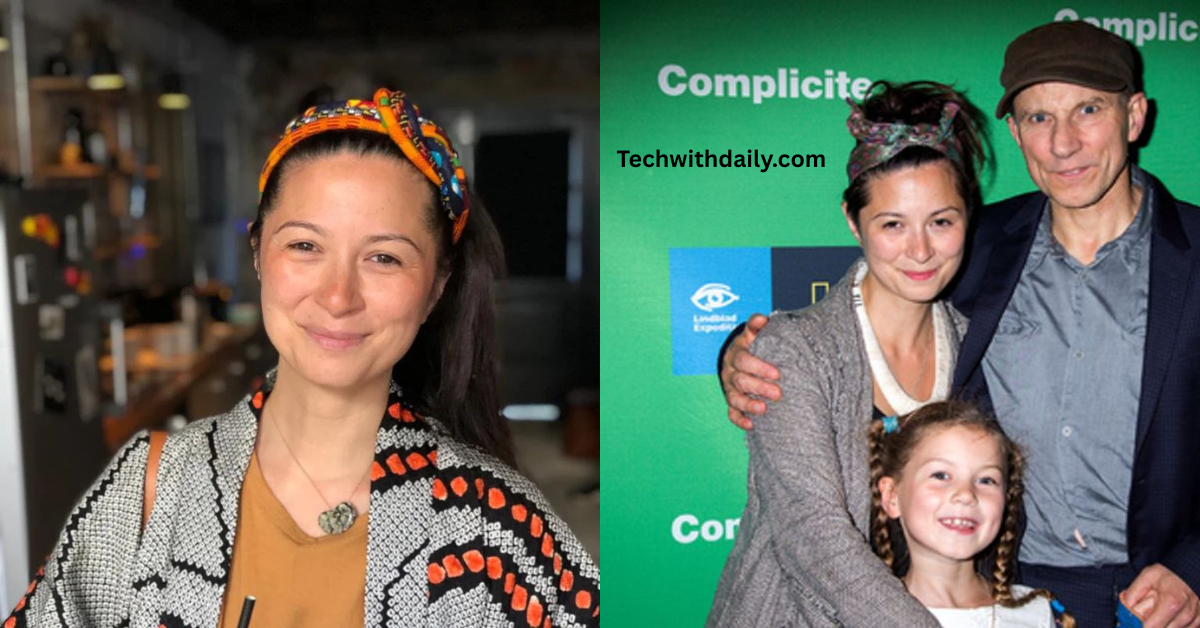
Cassie Yukawa, also known publicly as Cassie Yukawa-McBurney, is a British concert pianist whose life story is inseparable from one of the deadliest aviation disasters in history. Trained at the Royal College of Music in London, Cassie has built a career as a classical performer, but her name is most widely searched not because of her recitals, but because of her father: Akihisa Yukawa, a Japanese banker who died in the crash of Japan Airlines Flight 123 in August 1985.
Her story sits at the intersection of tragedy, family secrecy, and quiet resilience. While her younger half-sister, violinist Diana Yukawa, has received more mainstream press coverage over the years, Cassie’s own journey through grief, legal battles, and a life rebuilt around music is just as compelling. This article traces her family’s history, the events that shaped her childhood, and where her creative life has taken her since.
The Japan Airlines Flight 123 Tragedy That Shaped Her Life
To understand Cassie Yukawa’s story, it is necessary to understand the disaster that defined it. Among the passengers who died in the crash of Japan Airlines Flight 123 was banker Akihisa Yukawa, a Japanese executive who worked for Sumitomo Bank in London. The crash, which occurred on August 12, 1985, when a Boeing 747 lost control after suffering catastrophic structural failure, remains the deadliest single-aircraft disaster in aviation history, killing 520 of the 524 people on board.
Cassie was only four years old when her father died. According to reporting from Time magazine, when Akihisa Yukawa was reassigned to Tokyo, he brought along his partner, Bevan “Bayly,” and their newborn daughter Cassie. On the day of the crash, Bayly recalled walking with Yukawa to Cassie’s ballet school that morning, where he kissed her, patted her pregnant stomach, and told her to take care of “his last creation” — a reference to the child Bayly was carrying, who would become Cassie’s younger sister, Diana. Hours later, news of the crash broke on television.
What made the tragedy even more complicated for the family was the fact that Akihisa Yukawa left no will, and while he had told his parents about his second family in London, he had never informed his sons or his wife back in Japan. This meant that Cassie and her unborn sister Diana were, in the eyes of Japanese family law at the time, effectively invisible.
Growing Up Without a Father — The Fight for Recognition
The years following the crash were defined by a painful legal and emotional struggle for recognition. Because Akihisa Yukawa and Bayly were not married, Cassie and Diana were excluded from his official Japanese family registry, known as the koseki, under provisions of Japan’s Family Register Act that required formal acknowledgment or marriage for such inclusion.
According to Time’s reporting, the wealthy Yukawa family in Japan offered Bayly around $400,000 on the condition that she hide the existence of her daughters and give up any claim to the family estate; shocked and grieving with a newborn, she signed. This agreement meant Bayly could not apply for the compensation being distributed to other victims’ families by Japan Airlines and Boeing.
It was only years later, after the girls’ grandmother passed away in 1998, that the family decided to pursue formal recognition. Diana and her sister Cassie petitioned the courts, and in March 2000, the High Court of England ruled that under the laws of England and Wales, both girls were legally recognized as Akihisa Yukawa’s children. This declaration of paternity, based on DNA evidence, was a landmark moment for the family, though it took almost a decade longer, until June 2009, for Diana’s British birth certificate to be formally amended to include her father’s name.
The financial side of the story reflected just how difficult this period was. Japan Airlines initially offered the family only around $80,000 in compensation, later raising it to about $200,000, an amount the family rejected as insufficient. To help pay for the sisters’ music education, Diana was even forced to sell her 1656 Amati violin, with the family later explaining it was either that or losing their home. Meanwhile, Cassie pursued piano studies at the Royal College of Music while Diana studied violin under the renowned Ruggiero Ricci in Salzburg, Austria.
Every year around the anniversary of the crash, the family made pilgrimages to Mount Osutaka in Japan, the crash site, to honor Akihisa’s memory. In one particularly moving account, a twenty-year-old Cassie was described clutching wildflowers for the father she had last seen at age four, standing beside her mother and younger sister at the memorial site.
A Life Devoted to Music
Despite the hardship of her early years, Cassie channeled her grief and resilience into a serious career as a classical pianist. Her training at the Royal College of Music, one of the most respected conservatories in the world, gave her a strong technical foundation, and she has gone on to build a performing career that blends traditional classical repertoire with more experimental, immersive art projects.
One of her most notable early collaborations was a site-specific installation created in London titled “The Memory of W.T. Stead,” conceived for the historic site of the Steinway & Sons piano factory. The piece explored themes of sound, perception, movement, and memory, guiding small groups of visitors through a psycho-acoustic journey using headphones, music, and narrative elements. This experimental, boundary-pushing approach to performance has become something of a signature for Cassie, distinguishing her from more conventional concert pianists.
She went on to contribute a piano performance to “Eternal Return,” a virtual reality art piece created in collaboration with the artistic duo Lundahl & Seitl alongside VR studio ScanLab Projects. The work premiered at the STRP festival in the Netherlands and was later featured at the BFI London Film Festival before showing in New York. In one striking segment of the piece, visitors are guided to walk symbolically “through” a solid wall, while on the other side, Cassie is heard performing Bach’s Fugue in A Minor, arranged for piano — a haunting artistic echo, perhaps, of a life shaped by absence and connection to someone no longer physically present.
Read more: Felix O. Adlon: Biography, Career, Family & Everything You Need to Know in 2026
Cassie Yukawa-McBurney’s Artistic and Environmental Work Today
In more recent years, Cassie has expanded her creative work beyond the concert hall into environmental advocacy. She has become a public supporter of the Stop Ecocide movement, a growing international campaign working to make the destruction of ecosystems a recognized international crime. Describing herself as a “concert pianist and mother,” Cassie has spoken about humanity’s deep connection to the natural world, drawing a link between her artistic sensibilities and environmental consciousness.
In November 2021, Cassie performed at COP26 in Glasgow, lending her musical talents to support the global movement of lawyers, diplomats, and civil society figures pushing for ecocide to be formally recognized as an international crime. This performance reflected a broader shift in her public work, from purely musical performance toward art that carries social and environmental purpose.
She has also continued creating immersive, reflective performance experiences, including evenings that combine live piano, sound design, and shared communal reflection, often inviting audiences to think about lost loved ones, memory, and connection to place. These themes are unsurprising, given her own life story, though Cassie has built a distinct artistic identity that stands apart from being simply “the daughter of a crash victim.”
The Legacy of Akihisa Yukawa’s Daughters
While Cassie has largely kept a lower public profile than her sister, Diana Yukawa’s musical career brought international attention to the family’s story, which in turn shaped how the public came to understand Cassie’s own journey. Diana Yukawa, born in Tokyo in September 1985, one month after her father’s death, has released four solo albums and one digital EP, and began learning violin at the age of five. She went on to study under some of the most respected names in classical music, later releasing a debut album on BMG RCA at just fourteen years old.
Diana’s fame brought renewed attention to the sisters’ shared history, including a 2009 memorial service for JAL Flight 123 victims, where she performed a piece of music she had composed specifically for her father. Interestingly, a 2009 Japan Today headline covering Diana’s story, “Violinist linked to JAL crash blossoms,” became so famous for its unintentional ambiguity that it gave rise to the now widely used media term “crash blossoms,” referring to confusingly worded news headlines.
Read more: Valentine Rocky Adlon: Age, Family, Career & Life Behind the Spotlight 2026
Together, the sisters represent a rare and deeply human thread running through one of the twentieth century’s worst aviation disasters — proof that behind statistics and headlines are real families who spent decades fighting simply to be acknowledged.
Final Thoughts
Cassie Yukawa’s story is not one of overnight fame or viral internet searches without substance. It is the story of a woman who lost her father in a catastrophic and widely documented tragedy before she could truly remember him, who was denied legal recognition of that loss for years due to circumstances entirely outside her control, and who nonetheless built a meaningful, creative life centered around music, art, and now environmental advocacy. For readers searching her name, the real story of Cassie Yukawa is one of quiet strength shaped by extraordinary circumstances — a reminder that resilience often unfolds far from the public eye.